
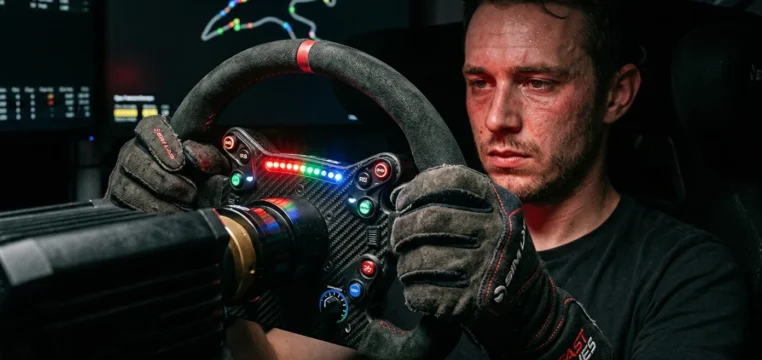
Most sim racers don’t actually have a hardware problem; they have a spending problem. They fall into a cycle of constantly buying new equipment, hoping that something will finally click: more force feedback, more precision, or more immersion.
They chase these upgrades in the pursuit of speed, but it rarely works out that way. The truth is that you aren’t really buying performance; you’re buying a feeling.
So, is sim racing gear worth it?
THE TRAP NOBODY TALKS ABOUT
At some point, it happens to everyone. You’re no longer a beginner; you’ve stopped crashing every lap, you know the tracks, and you’ve mastered the racing lines. But then, the improvement stops. You start losing tenths of a second everywhere and you can’t figure out why. Like most people, your first instinct is to upgrade. You get a better wheel, high-end pedals, and stronger feedback.
For a brief moment, it feels like it worked. Everything is sharper, more intense, and feels more “real.” But after a few days, you find yourself right back where you started: hitting the same corner and making the same mistakes. You brake a fraction too late, miss the apex by half a meter, or get on the throttle just wrong. You can feel the mistake, but you can’t fix it. You turn in, you feel the rear getting light, you KNOW it’s about to slide and you still react too late.
When the lap times stay the same, you convince yourself that you just need something even better.
THE LIE THAT KEEPS YOU BUYING
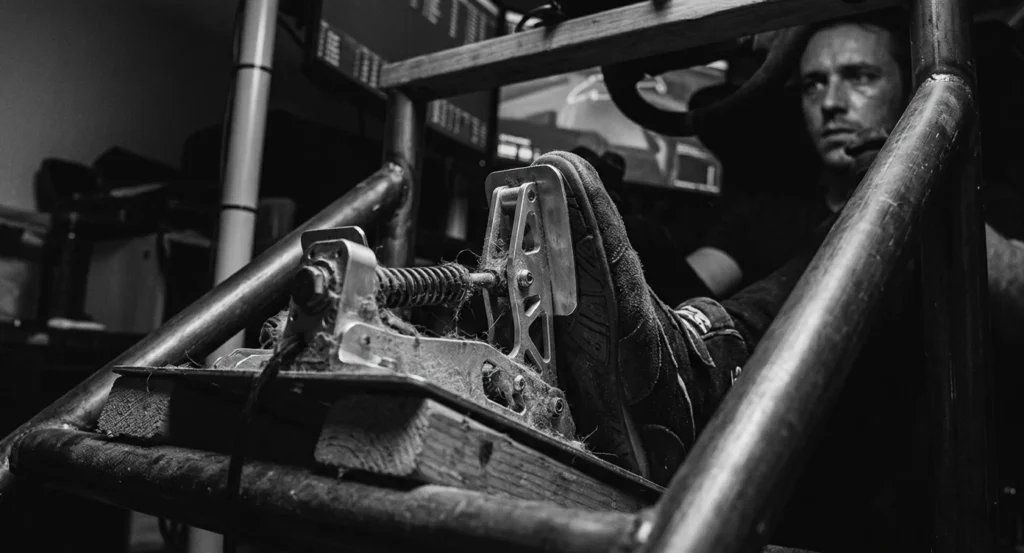
Here’s the truth nobody wants to hear: you don’t want this to be true because, if it is, it means the problem was never your gear it was you. It means there is nothing left to buy and no hardware left to upgrade; there is only a gap in your technique that you haven’t figured out yet. It’s a terrifying thought because you can’t solve it with a credit card; you can only solve it with time and discipline.
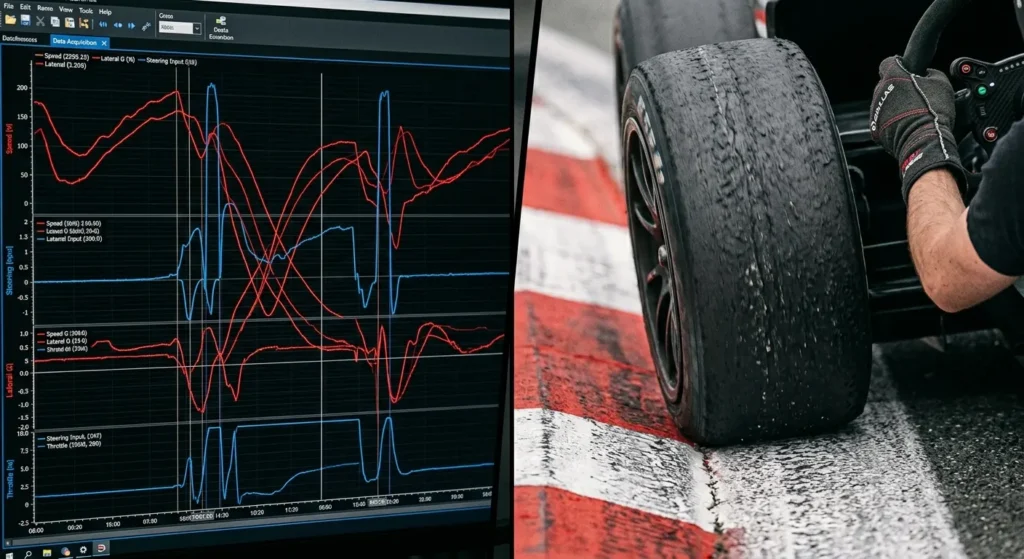
It makes things feel better. That’s it.
WHAT YOU’RE ACTUALLY CHASING
Deep down, you already know that you aren’t chasing performance, you’re chasing a moment. You want that specific feeling where everything clicks, the car finally makes sense, and you stop guessing and start feeling the road. Hardware feels like a shortcut to that sensation, but it’s an illusion. The biggest missing piece in most setups isn’t in your hands or your feet; it’s in your perception and awareness.
It’s your ability to actually read what the car is telling you.
WHY MOST SIM RACERS STAY STUCK
Two drivers can use the exact same car under the same conditions, yet one will complain about understeer while the other says the rear is loose. Driving isn’t objective; it’s an interpretation.
If your interpretation of the car’s behavior is wrong, no amount of expensive hardware is going to fix it.
If you feel stuck and can’t figure out where your lap time is going, this is where most drivers get it wrong:
👉 How to improve your lap times
THE POINT OF DIMINISHING RETURNS
There is a point where spending more money gives you less in return. Your first upgrade feels like a massive leap; the second is noticeable, but by the third, the difference becomes almost invisible. At that stage, you’re no longer paying for performance; you’re paying for refinement.
And refinement doesn’t fix bad inputs.
If you’re about to upgrade your setup, stop for a second and read this first:
👉 Best direct drive wheels under $1000
THE PART NOBODY WANTS TO ADMIT
Here’s where things get uncomfortable: most high-end sim racing gear today is already extremely good. I’m not talking about “good for the price” I mean just plain good. The differences people obsess over are certainly real, but they’re much smaller than you’ve been led to believe.
At a certain level, you aren’t choosing between “bad” and “good” anymore. Instead, you’re simply navigating slightly different feels, response times, or personal preferences. That’s really it.
However, marketing has a way of turning these minor distinctions into massive decisions. The reason is simple: if everything is already high-quality, brands need you to believe it isn’t so you’ll keep searching, comparing, and endlessly refreshing review pages. You find yourself buried in specs, trying to hunt down the “best” gear available.
But the truth is that at this level, the massive performance gaps just don’t exist anymore. There certainly isn’t a gap big enough to fix your driving.
THE MARKETING GAME (AND WHY IT WORKS)
Modern sim racing marketing doesn’t sell products; it sells emotion. It focuses on how the gear feels rather than what it actually does. When you see a pro driver with a perfect setup and smooth control, your brain naturally assumes that if you had that gear, you would drive like them.
But you wouldn’t. What you’re seeing isn’t the hardware, it’s the driver.
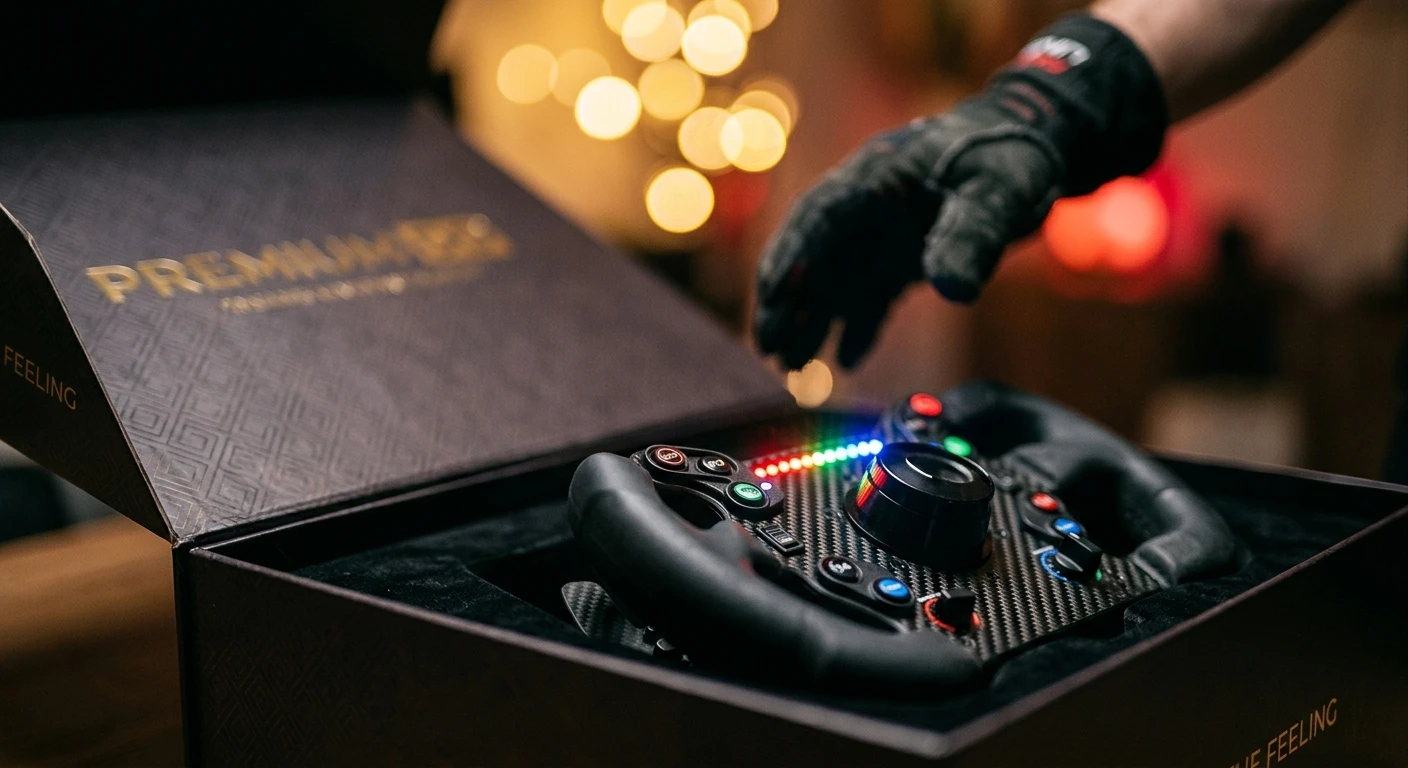
It shows you what it feels like, not what it actually does.
THE “SANTA CLAUS” PROBLEM
Sim racing is effective because it taps into a childhood sense of wonder. It brings you back to a time when everything felt real and exciting. Just as you once believed in things that didn’t exist, you now believe that the next upgrade will change everything. Every new piece of hardware becomes a version of Santa Claus.
You want to believe in the upgrade because believing feels better than accepting your own limits.
THE TRUTH
You don’t need better gear; you need better awareness. You need to understand what the car is doing, when it starts to brake, where you’re losing time, and why your inputs don’t match your intentions. Until that clicks, you’re just guessing. And no amount of money can fix a lack of understanding.
WHAT ACTUALLY HELPS
Real improvement comes from simplifying your focus. You need to isolate one mistake at a time and build awareness rather than just chasing raw speed. Learning to feel what’s happening before it goes wrong is where real lap time is found, not in a shopping cart.
WHERE MOST PEOPLE GO WRONG
Most sim racers try to fix everything at once by changing their setup, hardware, settings, and driving style all at the same time. They end up wondering why nothing improves, but the reality is that you can’t fix what you don’t understand.

learning to feel what’s happening before it goes wrong
FINAL THOUGHT
You can keep upgrading forever. There will always be something newer, better, and more “real” on the market. But eventually, you have to be honest with yourself: no piece of hardware will fix hesitation, bad inputs, or a fundamental lack of understanding. You can keep chasing the feeling, or you can finally face the truth.
The problem was never the gear; it was always how you use it.
And if you’re still wondering whether sim racing gear is worth it… Now you know the answer.
If you’re stuck and can’t figure out where your lap time is going, start here:
👉 How to improve your lap times
If you’re thinking about upgrading your setup, read this first before spending money: