

Many drivers spend thousands on high-end rigs thinking that gear alone is the secret to speed. However, if you truly want to improve lap times in sim racing, you’ve likely realized that expensive hardware is only half the battle. Real speed demands a fundamental shift in how you perceive the car’s limit and how you manage weight transfer under braking.
Whether you are struggling with consistency or plateauing at a certain pace, understanding the physics behind the movement is the only way to bridge the gap to the top-tier “aliens.”
The Myth of Pushing Harder
The most common mistake beginners make is thinking that aggression equals speed. In reality, speed is a byproduct of smoothness. When the goal is to improve lap times in sim racing, the challenge becomes one of precision rather than bravery.
Aggressive steering inputs and late, panicked braking often lead to tire overheating and a significant loss of exit speed the most crucial factor in any lap. To find those missing tenths, you need to stop fighting the wheel and start listening to what the chassis is telling you through the force feedback.
Consistency: The Foundation of Speed
You can’t improve what you can’t repeat. Consistency is the real secret behind every fast driver. If you can’t hit the same apexes lap after lap, you’ll never be able to analyze where you are actually losing time.
- Master the Braking Zone: Speed isn’t just about late braking; it’s about how you release the brake pedal to rotate the car (trail braking).
- Prioritize Exit Speed: A slow entry that allows for an early, flat-out exit is always faster than a fast entry that compromises your run down the next straight.
- Analyze the Data: Use telemetry tools to compare your lines. Often, the difference is just a few meters in your braking point or a slightly wider entry.
Understanding Weight Transfer and Tire Grip
One of the most overlooked aspects when trying to improve lap times in sim racing is mechanical sympathy. Every time you touch the brakes or the throttle, you are shifting the car’s weight. If you’re too abrupt, you overwhelm the tire’s contact patch, leading to understeer or a snap oversteer.
Learning how to “load” the tires before asking for maximum grip is what separates a good driver from a great one. This is why high-end pedals and direct drive wheels are so popular: they provide the fidelity needed to feel that exact moment when the weight has settled, allowing you to get back on the power earlier than your opponents.
The Role of Software and Telemetry
In 2026, you cannot expect to find the final half-second just by driving more laps. You need to analyze your performance. Tools like Motec or Garage 61 are essential. By comparing your telemetry to a faster driver, you might discover that while your line is correct, your “input shape” how fast you apply the brakes or how aggressively you turn the wheel is what’s holding you back.
Why Equipment Matters (The Honest Truth)
While we’ve established that hardware isn’t a magic fix, it is a tool for faster learning. A system that removes mechanical “noise” allows your brain to process the physics of the car more naturally. When your equipment accurately translates what the car is doing, your muscle memory develops faster, which is the ultimate shortcut to improve lap times in sim racing.
FAQ for Faster Laps
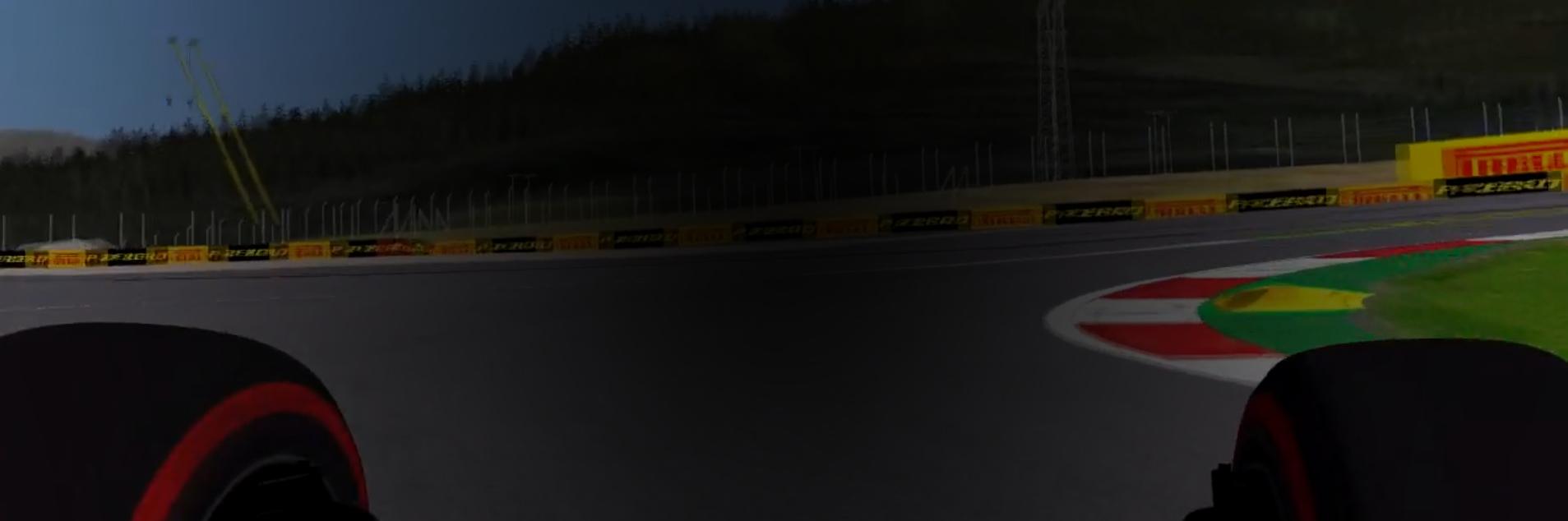
Does FOV affect lap times? Absolutely. A correct Field of View (FOV) allows you to judge distances and apexes more accurately. If your FOV is wrong, your sense of speed is distorted. Should I use ABS and Traction Control? While assists help beginners, learning to drive without them (or with minimal settings) allows you to feel the true limit of the grip, which is essential to improve lap times in sim racing at a professional level.
Realizing that the quest for speed is about mental discipline as much as physical skill is the first step toward the podium.