Originally published in 2021, this article has been fully updated in 2026 to reflect the latest technological breakthroughs at Maranello.
There is a precise moment when a Formula 1 driver loses faith in their car: it’s that split-second lag between the rear end stepping out and the brain perceiving the motion. For years at Maranello, that “delay” was the ghost haunting the Scuderia. But as we navigate 2026, the Ferrari new simulator is no longer a future promise it is the weapon that has rewritten the rules of engagement.
If you thought the old Moog “spider” was the pinnacle of technology, it’s time to shift gears. Welcome to the era of the Dynisma DMG-1.
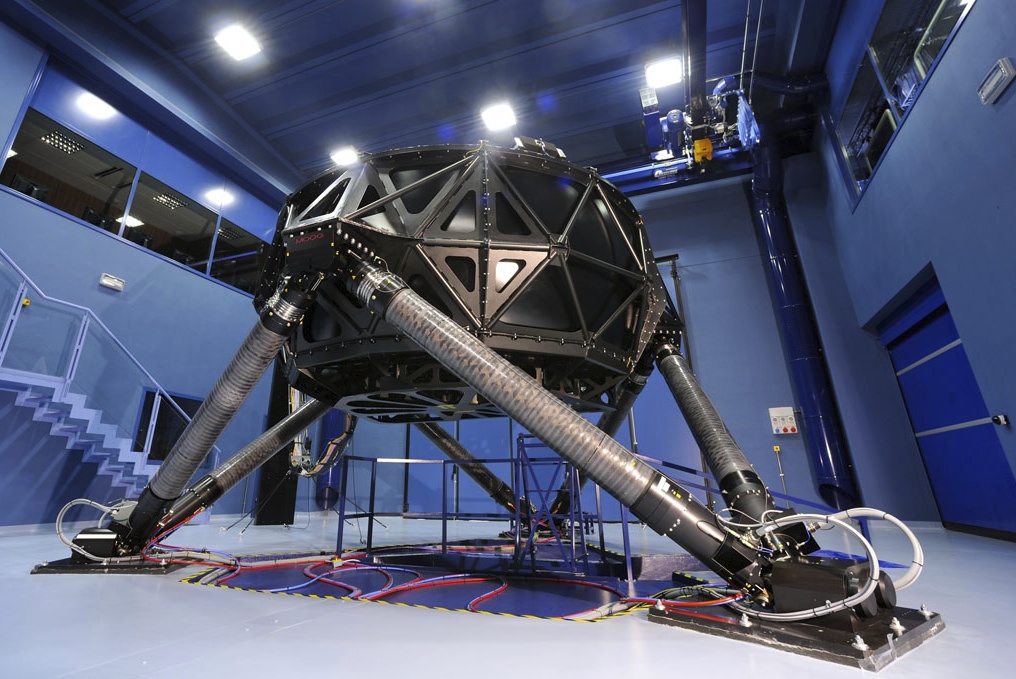
Saying Goodbye to the “Spider”: Why Old School Became Prehistoric
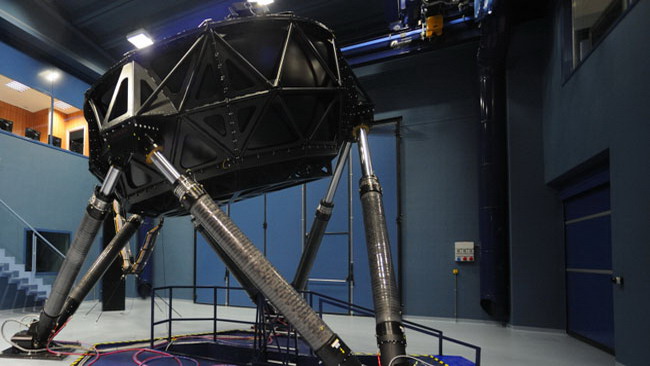
For over a decade, a massive hydraulic structure on six pistons, the classic hexapod, dominated a restricted room in Maranello. It was imposing, it simulated lateral G-forces, and it looked like something out of a sci-fi movie. Yet, for modern F1, it had become a dinosaur.
The problem? Latency. In professional sim racing, we know that force feedback is everything. Imagine driving with a 20-millisecond lag: on track at 300 km/h, that means you are reacting to an event that has already happened. Ferrari realized that to return to the top, they needed a paradigm shift: less mass to move, more information speed.
Dynisma DMG-1: The Simulator that “Talks” to the Driver’s Nerves
The heart of Ferrari’s new ecosystem is engineered by Dynisma, the UK-based company founded by former McLaren and Ferrari engineer Ash Warne. This isn’t just a collection of monitors and actuators; it’s a mechanical revolution that has shattered the limits of traditional motion platforms.
The War on Milliseconds
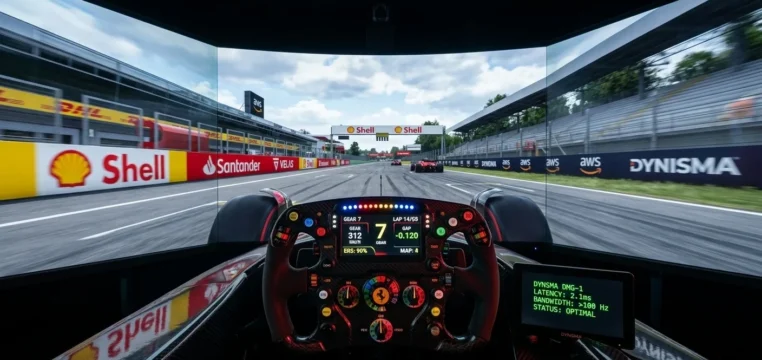
While conventional simulators struggle to break past certain response times, Ferrari’s DMG system operates with a latency of less than 3 to 5 milliseconds. For a driver like Charles Leclerc, this means the feedback hits his senses the exact instant it happens in the physics engine.
Bandwidth: Feeling the “Grain” of the Asphalt
If you are a simracer, you know the difference between a belt-driven wheel and a Direct Drive. The jump here is even greater. The new simulator boasts a bandwidth exceeding 100 Hz. What does that mean in practice?
- Surgical Feedback: The driver feels the micro-vibrations of a serrated curb or the subtle “lightness” of a front-tyre lock-up.
- Total Correlation: Virtual tests in Maranello finally mirror the track data, eliminating the “optimistic” data traps that plagued the team in previous seasons.
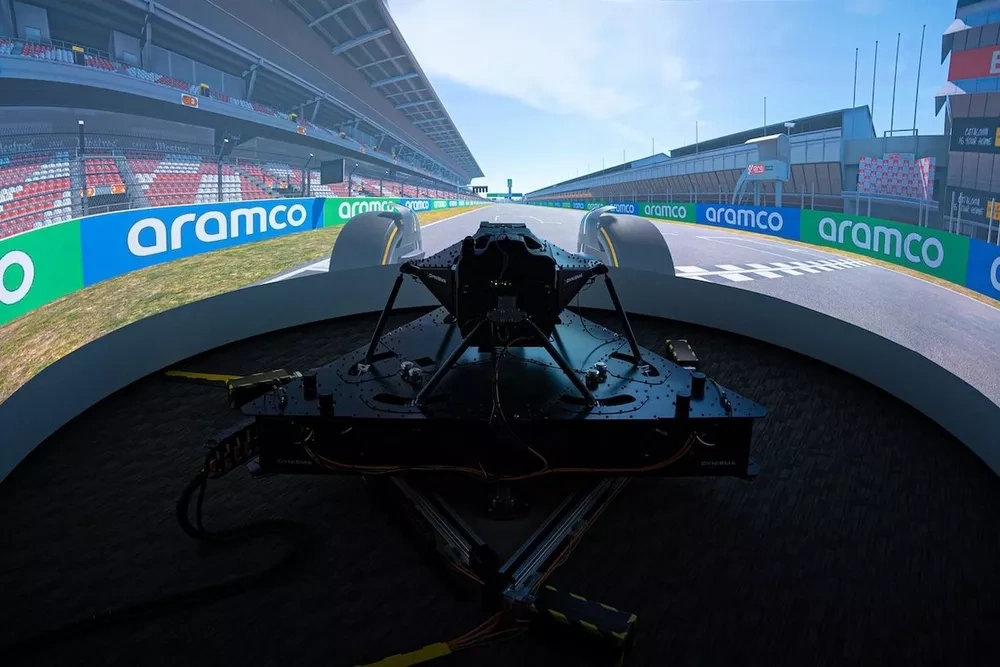
From Maranello to Prema: The Bridge Between Categories
The ultimate proof of Dynisma’s superiority is its “democratization.” Prema Racing, the legendary powerhouse that groomed talents like Kimi Antonelli and Oliver Bearman, adopted the DMG-1 to prepare the champions of tomorrow.
This creates an incredible technological thread: young drivers now arrive at the Ferrari Driver Academy having already trained on a platform that speaks the same mechanical language as the F1 car. Simulation is no longer just “practice”—it is transferable muscle memory.
AI Integration: The Invisible Co-Pilot
In 2026, Ferrari isn’t just using the simulator for driver coaching. The system is deeply integrated with Artificial Intelligence engines that analyze billions of setup combinations in real-time.
While the driver laps, the AI compares live feedback with CFD (Computational Fluid Dynamics) and wind tunnel data. If a discrepancy is detected, the simulator auto-calibrates. It is a living digital organism that allows the Scuderia to finalize a “perfect” setup on a Thursday night, before the trucks have even finished unloading in the paddock.
The Verdict: No More Guesswork
The Ferrari new simulator has closed the technical chasm that once saw Maranello chasing the digital efficiency of Red Bull. Today, the challenge isn’t just building a faster car, but interpreting the massive amount of high-fidelity data the DMG-1 produces.
For simracers, this technology is the Holy Grail. It reminds us that despite the processors and the bits, the human at the center remains the ultimate sensor. If the machine doesn’t “talk” to the driver, it doesn’t matter how fast it is on paper it will never win.
Ferrari has finally found its voice again. And out on the curbs of the world’s greatest circuits, the message is loud and clear.
Enjoyed this deep dive into F1 tech? If you want to know how to tweak your home setup to mimic the “low-latency” feel of a professional DMG-1 rig, let us know in the comments below!